
When Light Makes Tissue Changes Audible
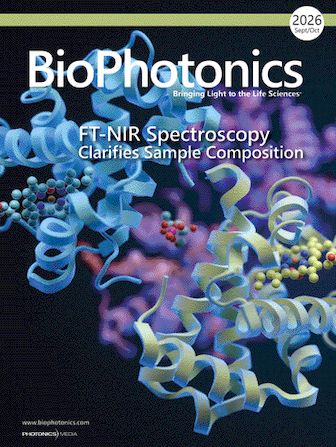
Photoacoustics Help to Track Changes in Tissue Health
The latest feature article in BioPhotonics by Ian Read and Weylan Thompson impressively demonstrates how photoacoustic imaging (PAI) has evolved from a promising research technology into a powerful tool for biomedical applications. By combining optical excitation with ultrasound detection, researchers can capture functional and molecular information deep within tissue that is difficult to access using conventional fluorescence-based imaging techniques.
One particularly exciting development is the growing use of multispectral approaches. The ability to identify different chromophores and biomarkers through their unique absorption spectra is opening new opportunities in cancer research, regenerative medicine, developmental biology, and pharmacology.
For these applications, the laser source is far more than just a provider of light. High-performance photoacoustic systems require precisely tunable, broadly tunable, and highly stable pulsed laser sources to accurately capture spectral information. This is where OPO-based laser systems play a crucial role. They enable the flexible selection of the optimal excitation wavelength and form a key foundation for modern multispectral imaging.
At GWU-Lasertechnik, we have been developing and integrating tunable laser systems and OPO technologies for many years.
The requirements of photoacoustics, including wavelength coverage, pulse stability, repetition rate, and seamless system integration, directly reflect the areas where our innovative laser sources can make the difference between a working experiment and scientifically meaningful results.
A highly recommended read for anyone interested in the future of biophotonic imaging and the role of advanced laser technologies in pushing the boundaries of biomedical research: Ian Read and Weylan Thompson, Photoacoustics Help to Track Changes in Tissue Health, BioPhotonics, Sept/Oct 2026
https://www.photonics.com/Articles/Photoacoustics-Help-to-Track-Changes-in-Tissue/p1/vo269/i1952/a72495